Vintage Western Cowboy Ride T-Shirt
As a designer who spends half my life staring at stitch maps and the other half judging how well a design translates from screen to fabric, I don’t just look for "pretty pictures." I look for viability. I look for designs that hold up under the tension of an embroidery hoop, that survive the wash cycle, and that actually excite a customer enough to buy them. That is exactly where Vintage Western Cowboy Ride T-Shirt enters the conversation. It isn’t just another generic clipart file; it is a mood piece with serious commercial potential if handled correctly.
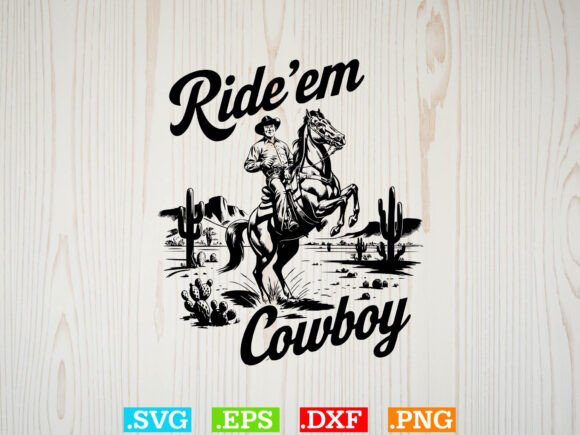
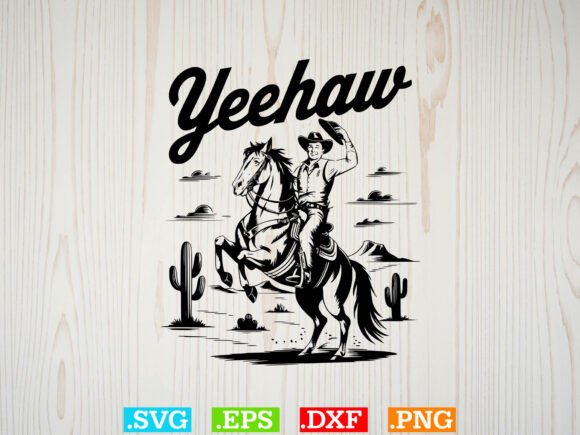
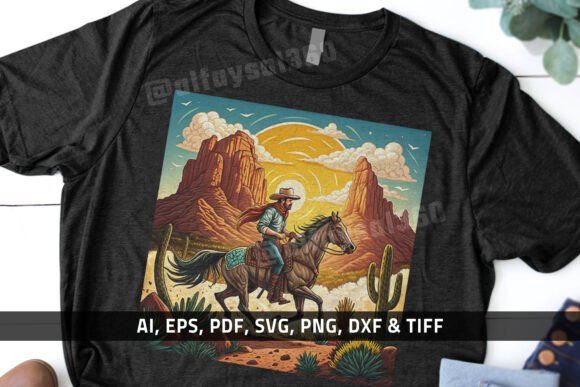
The visual narrative here is immediate. We are looking at a classic Western scene: a cowboy riding through a desert landscape at sunset, framed by rugged canyons and cacti. The color palette is warm, leaning into the nostalgic tones of sepia, burnt orange, and dusty browns. For those of us in the T-Shirt Designs and Graphics categories, this is gold. But for the embroiderer, the challenge lies in translating that flat graphic depth into thread. Does it have the structural integrity to be a machine embroidery design? Absolutely. Does it require some thoughtful execution? You bet.
First Impressions and Visual Personality
When you first load this file, the layout screams "heritage." It doesn’t try to be modern or minimalist. It embraces the ruggedness of the theme. The silhouette of the horse and rider is bold, which is the first thing any good embroidery file needs to be. If the main subject is too thin or intricate, it disappears when stitched. Here, the shapes are substantial. The vintage style works in our favor because vintage aesthetics forgive a little bit of texture variation. A slightly uneven fill stitch on a canyon wall looks like artistic grit; on a sleek corporate logo, it looks like a mistake.
The composition feels balanced for standard placement spots. It naturally lends itself to the left chest area of a sweatshirt or the center back of a tote bag. There is a sense of movement in the pose that suggests forward momentum, which adds energy to what could otherwise be a static image. This isn’t just a cowboy sitting there; he is riding. That kinetic energy is what makes it a strong candidate for custom apparel that people want to wear as a statement of identity rather than just a logo.
Real-World Application: From Screen to Stitch
Let’s talk about where this design truly shines. Imagine you are prepping for a craft fair or updating your Etsy shop for the holiday season. You need items that appeal to country lovers, rodeo fans, and anyone who appreciates rustic charm. Vintage Western Cowboy Ride T-Shirt fits perfectly into these niches.
Consider a heavy-weight cotton canvas tote bag design. The sturdy fabric can support the weight of the design without puckering. The warm colors pop against natural beige or black canvas. Now, think about a fleece-lined sweatshirt embroidery project for winter. The contrast between the soft fabric and the textured thread work creates a tactile experience that customers love. It feels premium. It feels handmade.
I also see this working exceptionally well as an embroidered patch. Because the design has a clear border and strong focal points, it would translate beautifully onto a denim jacket or a baseball cap. However, caps present a unique challenge due to their curved surfaces. While the design is robust, stitching on a curved brim requires a stiffener and careful hooping to ensure the horizon line of the sunset doesn’t warp. If you are an Etsy seller looking to diversify your small shop product line, creating a set of matching patches using this design could be a high-margin addition.
Where to Exercise Caution
No design is perfect for every surface. As a reviewer, I must point out where Vintage Western Cowboy Ride T-Shirt might struggle. First, avoid tiny hoop sizes. If you try to compress this level of detail into a 4x4 inch space, you will lose the definition of the cacti and the facial features of the rider. The details become muddy blobs. Stick to medium to large hoops to preserve the integrity of the artwork.
Textured fabrics are another minefield. While the rustic theme matches rough textures, highly nubby weaves can eat away at fine lines. If you are stitching on a chunky knit sweater, the background details might vanish. Similarly, stretchy fabrics like jersey knits require a high-quality tear-away or cut-away stabilizer to prevent distortion. Without proper stabilization, the circular motion of the horse’s legs could cause the entire design to pucker over time.
Dense stitch areas are worth noting. If the original file uses heavy fill stitches for the sunset gradient, check the stitch density. Too much thread in one area can make the fabric stiff and uncomfortable, especially on a baby embroidery item where softness is paramount. In fact, while this design has broad appeal, it might not be the best choice for delicate baby clothes unless simplified. It is better suited for adult apparel, aprons, or durable home decor items like pillow covers.
Design Notes for the Professional Embroiderer
To get the most out of this asset, you need to treat it like a professional embroidery project, not just a quick print-and-stitch job. Here is my practical advice:
- Thread Color Contrast: Don’t just use the colors shown on screen. Test your thread choices against the actual fabric. A light yellow thread on white fabric will disappear. Ensure your thread colors provide enough contrast to define the shapes, especially the sunset elements.
- Stabilizer Selection: Always use a stabilizer appropriate for the fabric weight. For commercial embroidery on t-shirts, a cut-away stabilizer is non-negotiable for longevity. For temporary items like tea towels, a tear-away might suffice.
- Black and White Mockups: Before you start stitching, convert the design to grayscale. This helps you identify areas where the light and dark threads might blend together, losing definition. It is a simple step that saves hours of rework.
- Hoop Size Confirmation: Verify that your machine’s maximum hoop size can accommodate the design dimensions. Nothing kills momentum like finding out halfway through a run that the design is too wide for the frame.
- Licensing Check: If you plan to sell finished products, double-check the license terms. Some digital assets allow personal use only. Ensure you have the rights to sell the finished product to protect your business.
Final Verdict on Value and Appeal
In the world of handmade goods, authenticity sells. Vintage Western Cowboy Ride T-Shirt taps into a timeless aesthetic that resonates deeply with a specific demographic. It feels authentic, rugged, and crafted. When executed well, it elevates a basic commodity like a t-shirt into a piece of wearable art.
For the creative entrepreneur, this design offers versatility. It works for holiday gifts, personalized birthdays, or as part of a broader western-themed collection. The key is in the presentation. Show the design on high-quality mockups that highlight the texture of the thread. Use printable mockup images that demonstrate how the design sits on different garments. Help your customer visualize the final result.
Ultimately, this is a solid addition to any library of design assets. It is not overly complex, yet it has enough character to stand out. It respects the limits of the medium while pushing the boundaries of what a vintage graphic can achieve in thread. If you approach it with the right tools, the right stabilizers, and a keen eye for detail, Vintage Western Cowboy Ride T-Shirt will not just stitch; it will speak. And in the crowded market of craft business items, being heard is everything.